Am I a Threat To Our Democracy?
by Ria Nicholas
I usually post about fun, historical travel destinations across the U.S. But today, I find myself on a detour through American politics – a route full of potholes and sharp turns to the Right or the Left. It’s an area that I’ve spent my life trying to avoid. I’m in uncharted territory without a map. And this is just the first leg of my journey.
We’ve all heard politicians accuse each other of being a threat to democracy. But am I, as an uninformed voter, the actual threat to our democracy?
The short answer is YES! . . . and NO . . . because, to my surprise, WE DO NOT LIVE IN A DEMOCRACY. Wait! What?!
Democracy

Isn’t a Democracy the ultimate in fairness – a government in which every vote counts equally and the will of the majority rules? Isn’t that the American way?
As it turns out, NO. Think about it! If citizens voted directly on laws and policies, as in a pure Democracy, there would be NO protections for minorities or for good but less-popular policies. It would constitute a “tyranny of the majority.” Since 80% of the U.S. population lives in urban areas, they would determine the laws for everyone, including those who live in rural areas. Populous states, like New York or California, would set the rules for sparsely populated states, like Wyoming – even though the people of those states have very different needs. That would be neither fair nor practical.
Constitutional Republic
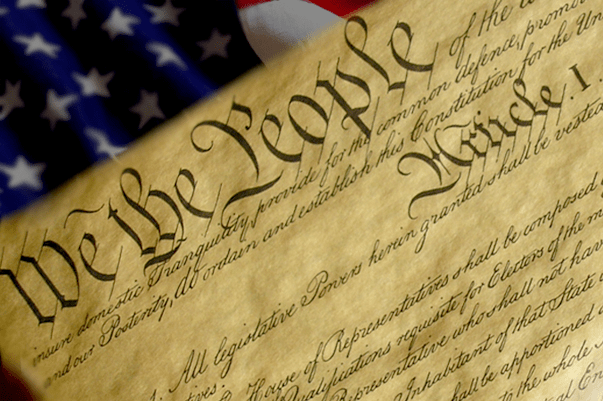
Instead, we live in a Constitutional Republic, a government rooted in the Constitution, which in turn derives its authority from the consent of the people. It codifies inalienable rights for individuals and protections for minorities.
“We the People of the United States, in Order to form a more perfect Union, establish Justice, insure domestic Tranquility, provide for the common defence, promote the general Welfare, and secure the Blessings of Liberty to ourselves and our Posterity, do ordain and establish this Constitution for the United States of America.“
Citizens don’t vote on laws directly. The Constitution prescribes how we may elect Representatives to pass laws on our behalf. We refer to these Representatives collectively as “Congress,” or the “Legislative Branch of Government.” Congress consists of two parts: the House of Representatives and the Senate.
The House of Representatives
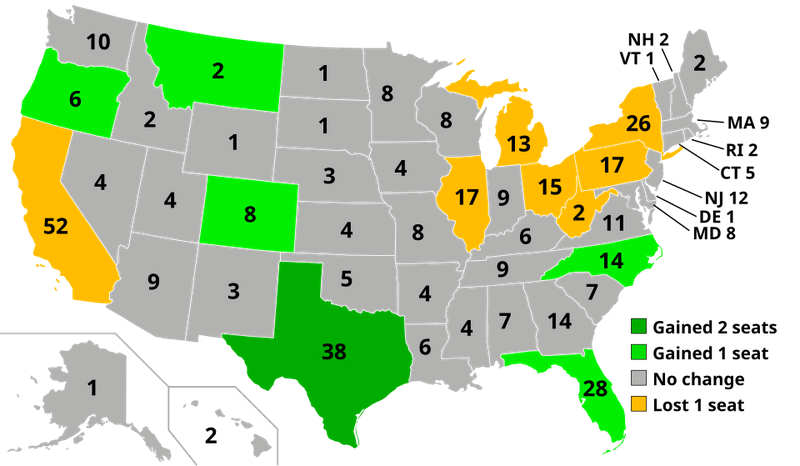
The Constitution directs that the number of Representatives allotted to each State be based on the population of that State. For example, California is our most populous State, with about 39.4 million residents. California has been allotted 52 Representatives in the House.
Our least populated State is Wyoming, with an estimated population of 590,170 people. It receives only one Representative.
Representatives shall be apportioned among the several States according to their respective numbers, counting the whole number of persons in each State . . .
The Census
To determine the population of each State, the Constitution calls for a National Census every 10 years and specifies that it should count the “whole number of persons” in each state. This has consistently been interpreted to include ALL residents – citizens and non-citizens alike (except for foreign tourists and business travelers in the country temporarily).

At this writing, there is ongoing debate about whether the Constitution contemplated counting persons who entered our country illegally, as the Census currently does.
The argument from the Right alleges that illegal aliens shouldn’t be counted any more than a foreign tourist should. Moreover, they argue Sanctuary States, which are overwhelmingly Democrat, attract more undocumented migrants, giving those States an unfair advantage in the apportionment of Representatives – (and thus of “Electors.” But more on that, below.)
The Left counters that many undocumented migrants pay taxes that contribute to the economy and should, therefore, be counted among the “whole number of persons” in a State as prescribed by the Constitution.
Voting Districts
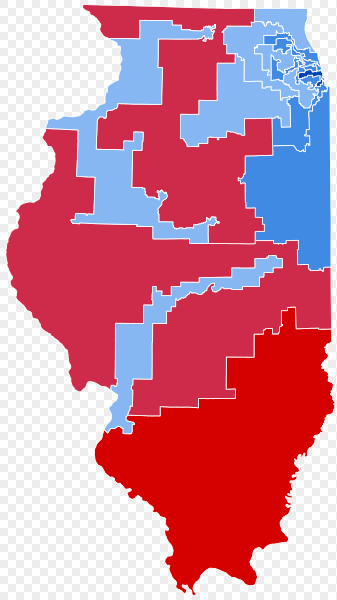
A Representative is elected to represent a voting District within his or her State. So, another point of disagreement involves how States draw District boundaries following a Census. Are those lines gerrymandered (manipulated) to disenfranchise certain groups of voters?
States draw their own Congressional District Lines, but the “how” varies from state to state. In most states, the task falls to the State Legislature, although some states use independent commissions, advisory committees, or hybrid methods.

The Constitution requires that Districts be drawn with populations that are as equal as possible – for example, not 50,000 in one District and 5,000 in another. Districts also cannot be drawn in a way that violates the Constitution, such as through racial discrimination. Additionally, States must make a good-faith effort to preserve contiguity (all parts connected).

At the time of this writing, there is a tit-for-tat battle among states regarding redistricting. As new Districts are created, they can shift Congressional seats to the Right or the Left. Texas Governor, Greg Abbott, recently proposed a map that would create 5 new Districts, likely leaning Republican. California Governor, Gavin Newsom, retaliated by threatening redistricting his state to gain more Democrat seats.
(Texas currently has 25 Republican members, 12 Democrat members, and 1 vacancy. California has 9 Republican members and 43 Democrat members in the House.)
According to Independent Voter News:
“North Carolina’s congressional maps are notoriously gerrymandered in favor of Republicans. In 2022, Republicans won 71.43% of congressional seats despite receiving about 50.7% of the statewide vote.
Maryland Democrats have long drawn congressional maps that crack Republican voters into multiple Democratic-leaning districts. Democrats won 62.62% of the statewide vote in 2024 — but hold all but one congressional seat (7 out of 8).”
Speaking strictly for myself, I would like my government leaders to exert less effort trying to beat each other and more effort on getting results that benefit their constituents, the American taxpayers. This is not a game! Our national security and the welfare of the American people literally hang in the balance. Sometimes, putting those interests first requires standing your ground; at other times, it requires cooperation and even collaboration across the aisle. But when politicians set out to win, the American people tend to lose. Shame on them!
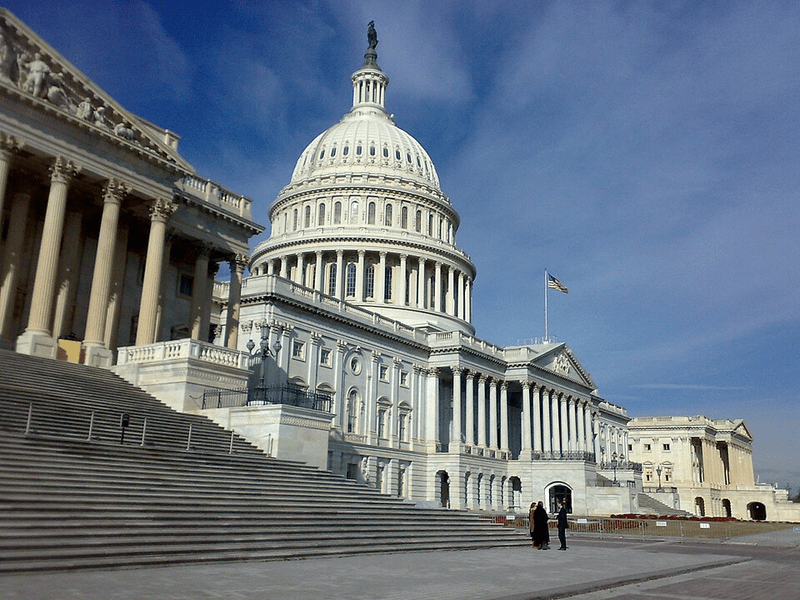
The Senate
During the summer of 1787, delegates to the Constitutional Convention disagreed over whether there should be one or two legislative houses and debated whether these houses should represent states based on their population or should continue with equal representation as it had been under the prior “Articles of Confederation.”
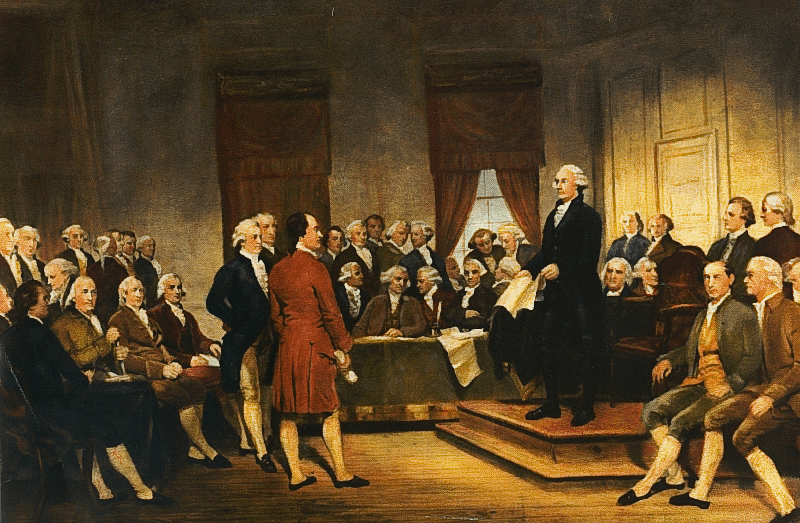

Unsurprisingly, delegates from more populous states wanted a more representative body while delegates from smaller states didn’t want to surrender all power.
A plan known as the “Great Compromise” prevailed. It called for two legislative bodies – one based on state population (The House of Representatives) and the other based on equal representation (The Senate). On July 16, delegates narrowly adopted the mixed representation plan giving each State two votes in the Senate.
The Electoral College
Okay, so I don’t vote directly for laws. That’s done by the Senators and Representatives I elect – all balanced to avoid majority (“mob”) rule. But I do vote directly for the President, right?
Nope.
The Constitution provides for Electors – the “Electoral College^ System” – for the indirect election of the President and Vice President. This, too, was created by the Framers of the Constitution to balance the interests of large and small states and to prevent regional candidates from dominating elections.
Article. II. Section. 1.
The . . . President of the United States of America . . . shall . . . be elected, as follows
Each State shall appoint, in such Manner as the Legislature thereof may direct, a Number of Electors, equal to the whole Number of Senators and Representatives to which the State may be entitled in the Congress . . .
Each state is allocated a number of Electors equal to its total number of Representatives plus Senators in Congress. (Washington D.C. also receives 3 electors.) For example, since Ohio has 15 Representatives and 2 Senators, Ohio gets 17 Electors.
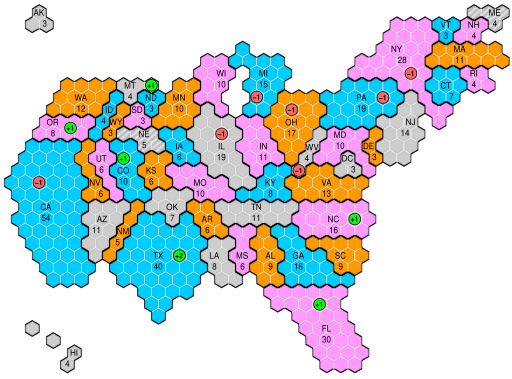
There are a total of 538 electors who vote in the national election, and candidates need to secure at least 270 electoral votes to win the Presidency.
Winner Takes All: In 48 States and the District of Columbia, the presidential candidate who wins the statewide popular vote receives ALL OF that State’s electoral votes. (Only Maine and Nebraska use a proportional system.)
If, for example, 51% of Ohio’s voters cast their ballots for Candidate A and 49% of voters cast their ballots for Candidate B, ALL of Ohio’s 17 Electors are bound to vote for Candidate A.
In our most recent (2024) presidential election, Donald Trump won both the popular and the electoral majority. He received 312 electoral votes. Kamala Harris received 226 electoral votes. More than 155 million Americans voted in 2024.*
So . . . does my vote really count? Of course it does! Political trends and ideologies are in constant flux. Whom we vote for to serve as our Senators and Representatives influences the laws passed by Congress. And our votes count toward determining how the Electoral College votes are cast for president.
By all means, vote! It is the right of every citizen over 18** – some even consider it a civic duty. But it’s best not to cast votes based on emotional reflexes, under the fog of half-truths, innuendos, and misinformation. That would probably be worse than not voting at all. I now strive to do my research, get my information from a rich variety of sources, and to stop and THINK about what makes sense. Otherwise, my votes would be cast in darkness, and that may be the single biggest threat to our “democracy.”
^The term “College” derives from the Latin “Collegium,” which means “society.” * These numbers are according to the Council on Foreign Relations. ** Some citizens, such as certain felons currently serving time and certain people with mental disabilities may not be eligible to vote.
Link to a transcript of The Constitution of the United States:
https://www.archives.gov/founding-docs/constitution-transcript

 American History Road Trip